Translate

Sunday, May 24, 2015

Let's Go Out To The Movies: "Tomorrowland" (PG - Disney - 2 hrs, 10 mins)

Directed by Brad Bird
Written by Brad Bird and Damon Lindelof
Alo Party Peoples.

There's a running joke that circulates around film circles that Pixar veteran Brad Bird is a secret Objectivist, mostly built around really cynical readings of The Incredibles, a story about natural-born superheroes being forced into normality by society, with a villain who's big master plan involves forcibly leveling the human-superhuman playing field. "If everyone's super, no one is." 

I don't necessarily agree with that reading of his work - part of the message of The Incredibles is that the exceptional have a responsibility to use their talents for the betterment of society as a whole, which runs directly counter to Objectivism's putting fulfillment of selfish desire above all else, but most creative folk have thought "the rules and regulations inherent to the social contract only hold back human progress" at some point.

So if Brad Bird really does sleep with a copy of The Fountainhead under his mattress, it's no more so than most other film makers. That being said, if The Incredibles is Brad Bird's Anthem, then Tomorrowland is his Atlas Shrugged, mostly because it's also Disney's happy, family friendly, explicitly sci-fi version of Atlas Shrugged.

To wit, we open at the 1964 World's Fair, where plucky young inventor Frank Walker has designed a prototype jetpack which catches the eye of Athena, a young girl that invites him into Tomorrowland, a retro futuristic utopia where mankind's best and brightest minds have gone to freely create all sorts of wonderful things. Sustainable cold fusion, faster-than-light space travel, honest to god flying cars, all of these and more have been achieved in Galt's Gulch - I mean Oz - I mean Krypton - I mean Tomorrowland.

Then we cut to the present, a grey, washed out dystopic hellscape that has all but forgotten how to dream. But some, like Britt Robertson as Casey Newton haven't lost the spark of optimism, to the point that she's breaking into Cape Canaveral to stop the dismantlement of the Space Shuttle program, which sparks the attention of Athena and sets her on a quest to reach this Zeerust paradise. She finds George Clooney as the now adult Frank, who was kicked out of Gene Roddenberry's Shownotes for inventing something he shouldn't have, and they discover that something's gone wrong, and that Tomorrowland has become a decaying shell of a million broken dreams.

Just as the fictional Tomorrowland is contrasted with the real world's pessimism, Tomorrowland the movie posits itself as a direct contrast with the grim, self serious state of 21st Century blockbusters in general, and the current glut of post-Hunger Games dystopic sci-fi in particular, emphasized by both a running gag of a fake movie poster for ToxiCosmos 3 (no, seriously), and by multiple characters directly stating this to the audience. Brad Bird has achieved a level of visual mastery on par with Neill Blomkamp, and he has also achieved his level of subtlety, which is to say he believes it involves sledgehammers. (not that Bird was especially subtle to begin with, The Incredibles was essentially Watchmen for third graders)

Here's the thing, I'm on the same page as Brad Bird vis a vis being absolutely sick of grim, dystopic futures in popular culture, and I'd like to see us return to a mindset where science can actually improve the world rather than end it - and if he had written an editorial on that subject I'd totally back him, but he went and hung a story around that framework, and it doesn't quite fit.

Not that Tomorrowland is a bad movie, it's masterfully directed and better designed, it's a godsend to see bright, vibrant colors in a live-action feature, Britt Robertson is a for real rising talent, the action, although it leans a little heavy on slapstick for my taste, is consistently exciting and makes fine use of all the wacky raygun gothic super-science on display, in all honesty it feels like a fully realized exploration of the good parts of Interstellar. But it's script is at once incredibly optimistic and incredibly cynical, and not in a good way, especially since it feels like the current wave of dystopian futures is finally starting to crest.

I can imagine Brad Bird as an old man waving a cane and screaming "Back in my day, the future was a better time, what happened to us?" I get where he's coming from, and I want to back him up on it, but at the same time I feel like he's blinded by nostalgia for a "good old days" that never really existed.

Have a nice day.

Greg.B

Sunday, May 17, 2015

Let's Go Out To The Movies: "Pitch Perfect 2" (PG-13 - Universal - 1 hr, 55 mins)

Pitch Perfect 2 (2015) Poster
Directed by Elizabeth Banks
Written by Kay Cannon and
Mickey Rapkin
Alo Party Peoples.

I am about as far from the target audience for the Pitch Perfect movies as you can get. It's a series aimed alternatively at female college-age Millenials and overworked parents on family movie night, I'm a young man on the border between the Millenials and... whatever we decide to call the generation after. My personal taste tends to run pretty far from modern family films and from the tastes of other people my age. Oh, and I cannot stand accapella, I just can't. If I wanted to listen to "Wrecking Ball" for some ungodly reason, I'd listen to "Wrecking Ball", not a bunch of people making a rough approximation with their mouths.

So I was not going into this movie expecting anything good. It's a comedy sequel that isn't being helmed by the Lord/Miller duo, why would I expect anything but an unfunny muddled mess? And Pitch Perfect 2 starts off like it's going to fall into the all too common comedy sequel trap of just expanding the scope of the first installment without having anything new to add to the premise. Which in this case is the trials and tribulations of the Barton Bellas, a women's acapella group at a university. But then, somehow, it slowly becomes something with it's own distinct character that comes off as legitimately funny, and almost becomes worth a matinee, before sadly overstaying it's welcome.

Pitch Perfect 2 picks up with the Barton Bellas completely blowing their success from the previous installment and getting suspended from their nationwide tour, but they find a loophole in the paperwork allowing them to get back in if they win at the global level. To do that, they have to defeat the touring act that's replaced them, a big-shot artsy, sorta-edgy German group named Das Sound Machine.

It's basically the first Pitch Perfect, but with more stuff in it. More antics from Rebel Wilson's breakout character Fat Amy, which alternate between landing with a chuckle or a collapsed thud, more understated antics from Hana Mae Lee as Lily the mostly silent oddball of the group, more acapella pop songs, ranging from a tear inducing rendition of "Uprising" from Das Sound Machine to "Cups (When I'm Gone)" a pretty good original song performed by the Bellas.

Then things start to get interesting when the Bellas head out to a secluded forest retreat to "re-harmonize" themselves and "rediscover their sound" in preperation for the big contest. The characters are really able to shine, director Elizabeth Banks infuses some real visual energy into what would otherwise be a series of lightly edited improv routines, the whole thing starts to feel like it could be a really solid family comedy.

But then it gets to the big championship concert and sort of falls apart. Even if acapella isn't your thing, and it isn't mine, the characters had been so solid so far that you could ignore that, helped by the fact that none of the songs have anything to do structurally or thematically with the plot. But the finale is all acapella all the time, and it goes on, and on, and on... The whole thing just sort of goes on about half an hour too long for its own good.

I don't know that Pitch Perfect needed to be a franchise, but it's second installment is a mostly solid distraction, and with some fine tuning I suspect the series could become something truly worthwhile.

Have a nice day.

Greg.B

Sunday, May 10, 2015

Let's Go Out To The Movies: "Hot Pursuit" (PG-13 - Warner Bros. - 1 hr, 27 mins)

Directed by Anne Fletcher
Written by David Feeney and
John Quaintance
Alo Party Peoples.

Objectively, there is very little reason for Hot Pursuit to exist. Warner Bros. certainly thinks so, why else would they release it one week after an Avengers sequel? But as an introduction for Reese Witherspoon and  Sofia Vergara as a comedy team, it mostly does it's job.

If you can get behind the pair's manic energy, you won't mind that Hot Pursuit is a by-the-numbers road trip buddy comedy with nothing in the way of surprises or fancy technical tricks, but Witherspoon and Vergara really are a good enough pairing to make it all feel a bit more substantial than it really ought to - at least in the moment.

To wit, Reese Witherspoon plays Cooper, a high strung by-the-book San Antonio police officer charged with escorting a witness in a high profile drug case to trial. When her charge is assassinated by a rival cartel, she flees the scene with Sofia Vergara as the witness' wife and through a bit of corruption is blamed for the murder of one of her fellow officers and ends up on the lamb as she desperately tries to get her new charge to Dallas to give her testimony, and of course various hi-jinks ensue along the way.

Those hi-jinks mostly involve the two leads bickering to show off their chemistry, which is often pretty fantastic. If you like Vergara's schtick as a melodramatic, hot-tempered ethnic caricature on Modern Family, you will like her here, and Witherspoon makes a great straight-man to play off her. They really are a great comic-duo, I just wish they had a better script to be funny in.

The screenplay isn't exactly bad, far from it, it moves along at a good clip, there's no glaring plot holes or anything that insults the audience's intelligence or anything like that, but there's a significant lack of substance and very little directorial style to make up for it. That doesn't make Hot Pursuit a bad movie, just an unremarkable one. Its worth seeing for any fans of the two leads, but I'd avoid rushing out to the theater and wait for DVD or streaming.

Have a nice day.

Greg.B

Sunday, May 3, 2015

Let's Go Out To The Movies: "Avengers: Age of Ultron" (PG-13 - Marvel/Disney - 2 hrs, 30 mins)

Short Version- It's good, not as good/iconic as the first one, but it's still a total blast to watch. Take the kids, they'll love it. Only one mid-credits scene, so you can go home early.-Long Version...

Alo Party Peoples.
Directed and Written by
Joss Whedon

If The Avengers was the original Star Wars, and Winter Soldier was The Empire Strikes Back, then Age of Ultron is Return of the Jedi. The first rewrote the book on modern action cinema, the second went bigger, bolder, and completely rejiggered the status quo with massive revelations, and the third is still a satisfying action film but doesn't quite reach the highs of either of its predecessors.

Make no mistake, Age of Ultron will likely be one of the summer's finest offerings of spectacle. It's funny, it's gorgeous, it's entertaining, but there's no "Puny god." or "I'm always angry." or this scene to make it something truly amazing and push it into pop-culture immortality like it's predecessor. With such a large expansive universe juggling multiple platforms, one of these movies just being good was probably an inevitability for Marvel, but they've set such a high standard for themselves that it feels like more of a letdown than it is.

Age of Ultron picks up in the wake of Winter Soldier with the Avengers picking off the last remnants of Hydra and capturing a base containing Loki's scepter, which has been used by a mad scientist to turn a couple of war orphans with a grudge against Tony Stark into the super-humans Quicksilver and Scarlet Witch. When Stark and Banner discover that the Scepter basically works like a computer, they decide to use it as the basis of an artificial intelligence program meant to run a global network of Iron Legionaries meant to tackle threats too big for superheroes. This "suit of armor around the world" quickly becomes an iron maiden when the AI immediately becomes a deranged lunatic that decides that making the world safe means killing the Avengers, and the rest of humanity not long after. Except for the war orphans since Scarlet Witch's telepathy proves useful in seeding discord among the Avengers.

Mark Ruffalo, Robert Downey Jr, Chris Evans, Jeremy Renner,
Scarlet Johannson, and Chris Hemsworth as the Avengers
This is the kind of big, ridiculous storytelling that could only originate in characters originally meant to entertain children, and while certain other superhero films treat that legacy like a burden, Age of Ultron embraces it wholeheartedly without any sense of irony or self-depreciating humor. This makes it, more so than any other Marvel Studios production, feel like a live-action cartoon in the best possible way. The action scenes are a ton of fun, the dialouge is consistently funny and quotable, delivered by actors that are by now immensely comfortable embodying these characters, and no matter which one is your favorite, you will love what they do with them, especially a much expanded role for Hawkeye that somehow turns him into an interesting character.

James Spader as Ultron
If there's one place where it comes up short, besides lavish editing for time that turns a second act spirit quest by Thor clearly meant to set up his third solo-outing into a weird digression that goes nowhere, it's Ultron himself. Don't get me wrong, he looks gorgeous, and James Spader is clearly having a blast playing him as having a serious god complex and a fragile ego, but he's a surprisingly shallow villain. Sure, this isn't and was never going to be an Ex_Machina level exploration of AI, but there's no real reason for him to immediately go crazy and decide that genocide is the only route to peace. There's not even a scene of Tony Stark being a prick to him that pushes him over the edge or something, it just comes out of nowhere.

But that's mostly nitpicking in what's almost certainly going to be a real highlight for summer 2015. When I say that Age of Ultron is only good, that's in comparision to the other Marvel Cinematic Universe films, and their standards are set so high that just 'good' is closer to amazing. Age of Ultron may not as good as it's predecessor, but it's still a fantastic action film. I had a wonderful time with it, and I'm sure that many of you will as well.

Have a nice day.

Greg.B

Sunday, April 19, 2015

Let's Go Out To The Movies: "Paul Blart: Mall Cop 2" (PG - ColumbiaPictures - 1 hr, 34 mins)

Directed by Andy Fickman
Written by Kevin James and Nick Bakay
Alo Party Peoples.

I had no intentions of seeing Paul Blart: Mall Cop 2 this weekend. I already had a perfectly good post about Ex Machina up, and I thought to myself "No, just no. This is below my dignity as a filmgoer and as a film critic, I refuse to pay money in order to subject myself to Paul Blart 2." I was not alone in this, Sony didn't hold press screenings for it - which almost never happens unless they have something truly terrible on their hands - and critics that did decide to see it have universally panned it.

I decided to take my girlfriend out to a different movie instead, so I gave her a call, and it turned out she didn't want to see Unfriended (why is that coming out now and not in October?) so we were talking about alternatives, and I brought up that she probably didn't want to see Paul Blart 2. But then she said to me "It can't possibly be that bad, let's give it a shot!", and I said "Really?" and she said "Yes, really." so we did just that. Two minutes in, they tried to make a joke out of an old woman being run over by a truck, and I knew this was a mistake.

Surprising absolutely no one, Paul Blart: Mall Cop 2 is a terrible movie, a seriously, seriously terrible movie.  Joke after joke lands with a resounding thud, every character has no discernible personality - even by the very generous standards of modern family films - there is no sense of place with its setting in Las Vegas, and the whole thing is just alternately depressing or dull, depending on whether or not you care in the first place.

Kevin James as Paul Blart
It's not like the first Paul Blart was a masterpiece or something - not by any stretch of the imagination - but it wasn't bad, or it was at least tolerable. The sequel on the other hand, is horrible, mostly by virtue of the age old problem of bad comedy sequels. It has no new perspective to give on the concept and mostly feels like reheated leftovers of the first installment. To wit, after saving the mall in the first one, Paul Blart has hit a rough patch in his life. His wife of just six days filed for divorce, his mother was run over by a milk truck, and his daughter is growing up too fast since she's been accepted to ACLU.

At the same time, Paul gets an invitation to a security officer's trade show in Las Vegas, or more specifically at the Wynn Hotel and Casino TM, and decides this is just the opportunity he needs to bond with his daughter, and he stumbles upon an attempt by organized thieves to steal the hotel's art collection. If that sounds familiar, that's because it is. Paul Blart 2 is just Paul Blart again, but in a different setting, sort of. You see, this is a film from Happy Madison, which is Adam Sandler's production company. Also known as Adam Sandler's excuse to take a bunch of his fellow comedians out on vacation with Sony and the moviegoers of Middle America footing the bill.

Jack and Jill was an excuse to go on a cruise, Blended was an excuse to go out on a safari, and Paul Blart 2 is an excuse for Sandler, James and company to hit the Vegas Strip, but we never get to see the strip for ourselves since leaving the Wynn TM would mean doing actual work. Once the characters get to the hotel, we never leave it. It's almost like a feature-length commercial for the Wynn TM, which I'm sure was a significant source of funding to make up for the surprising lack of Sony's signature product placement.

The bottom line is, Paul Blart simply isn't funny, at all. It's a comedic black hole that sucks any humor or charisma out of Furious 7 playing one theater over. Every joke falls flat. Every. Single. Last. Joke. They're mostly composed of Paul Blart running into heavy objects, Paul Blart being a prick for no reason, or sad attempts at banter. The first one may not have been comedy gold, but it was at least in good spirits, this one isn't even trying, and Blart himself has gone from a likable shlub to an insensitive obstinate prick. As a result the film's emotional core, his growing ever more distant from his daughter, just doesn't work because we want her to get away from this jerk.

Paul Blart: Mall Cop 2 is a failure. A lazy, uninspired sequel to an original that couldn't sustain a sequel. At least in my mind, this does more damage to Sony Pictures' reputation than North Korea or Wikileaks could ever manage to inflict. An instant contender for the Worst of the Year title, and it's April.

Have a nice day.

Greg.B

Friday, April 17, 2015

Let's Go Out To The Movies: "Ex Machina" (R - Universal/A24 Films - 1hr, 48 mins)

Directed and Written by Alex Garland
Alo Party Peoples.

If you liked Inception or Alien or The Matrix, then you will likely enjoy Ex Machina. If you want sci-fi with some intellectual meat to chew on, something in the spirit of The Twilight Zone, then you will enjoy Ex Machina. If you were disappointed by Lucy and want to see its themes properly explored, then you will love Ex Machina. I meet those criteria, and I suspect that Ex Machina will be one of the best films of 2015.

The reason Ex Machina is such a great film is simple, it's a great script playing with big ideas paired to a good director and good actors, with an amazing technical department to boot. It all adds up to a lean, tight, no-nonsense sci-fi thriller that Lucy wanted to be but utterly failed to.

Domhnall Gleeson plays Caleb, a computer programmer for a massive tech company that wins a contest to spend a week with the company's reclusive founder Nathan played by Oscar Issac, at his secluded mansion out in the middle of the wilderness. He finds out that it wasn't a contest, and that he was chosen by Nathan the human component of a Turing Test, sort of. Nathan has built Ava, an intellegent AI played by Alica Vikander, and he wants to find out if, even though she is obviously not a human, she acts enough like one for people to still empathize with her. She definitely passes, perhaps too well, and Caleb starts to suspect that Nathan has some ulterior purposes in mind.

Domhnall Gleeson as Caleb, Oscar Issac as Nathan
This is the directorial debut for novelist and screenwriter Alex Garland, and it shows. Huge segments of the film are presented with chapter headings, the screenplay is filled to the brim with allusions to myths, legends, scriptures, and visual arts, and it is just so rare to see cinematic sci-fi these days asking deep questions about free will and authority and what it means to be human and society and technology's place therein. Most cinematic sci-fi tends towards the fanciful realms of action or horror, so when something like Ex Machina comes along, it is something to be deeply cherished.

The actors are great, Domhnall Gleeson's Caleb is a relatable schlub, but in a very connectable way. Alica Vikander as Ava is simply amazing. This role requires absolute muscle control to show just enough emotion so the audience can empathize with them, but hold enough back to remind them that she's still essentially the daughter of HAL 9000 and Siri. Oscar Issac, oh dear lord, Nathan is a great, complex character. He plays him like an amalgam of Mark Zuckerberg, Steve Jobs, and Larry Page that created the source code for a search engine at the age of thirteen, and grew stinking rich off of it, and isn't happy with it at all. He's so unhappy wit the rest of humanity, and has such a massive ego, that he's convinced he can create a better version of it, hence his creating Ava. (oh hey, that's really similar to Eve)

Alica Vikander as Ava
Ex Machina is practically the definition of a well produced film. Alex Garland seems to be taking his cues from 2001: A Space Odyssey, and Apple. So there are a lot of stark, sterile whites, and greys, and the whole house looks like the inside of an iMac, the precision of design almost makes it look like Wes Anderson's The Shining. Not to mention the seamless effects work it took to make Ava look the way she does. It took  It also does amazing things with sound, like, it had better win the Oscar. Unlike, say, Interstellar, the pounding sonic weight of the soundtrack emphasizes the action onscreen instead of drowning it out.

Ex Machina is brainy, big idea sci-fi of the best possible kind, and an instant contender for the Best of the Year title. It has already played in much of Europe, but is currently playing at select theaters in the US before going national next week. It's definitely worth checking out if you get the chance.

Have a nice day

Greg.B

Tuesday, April 14, 2015

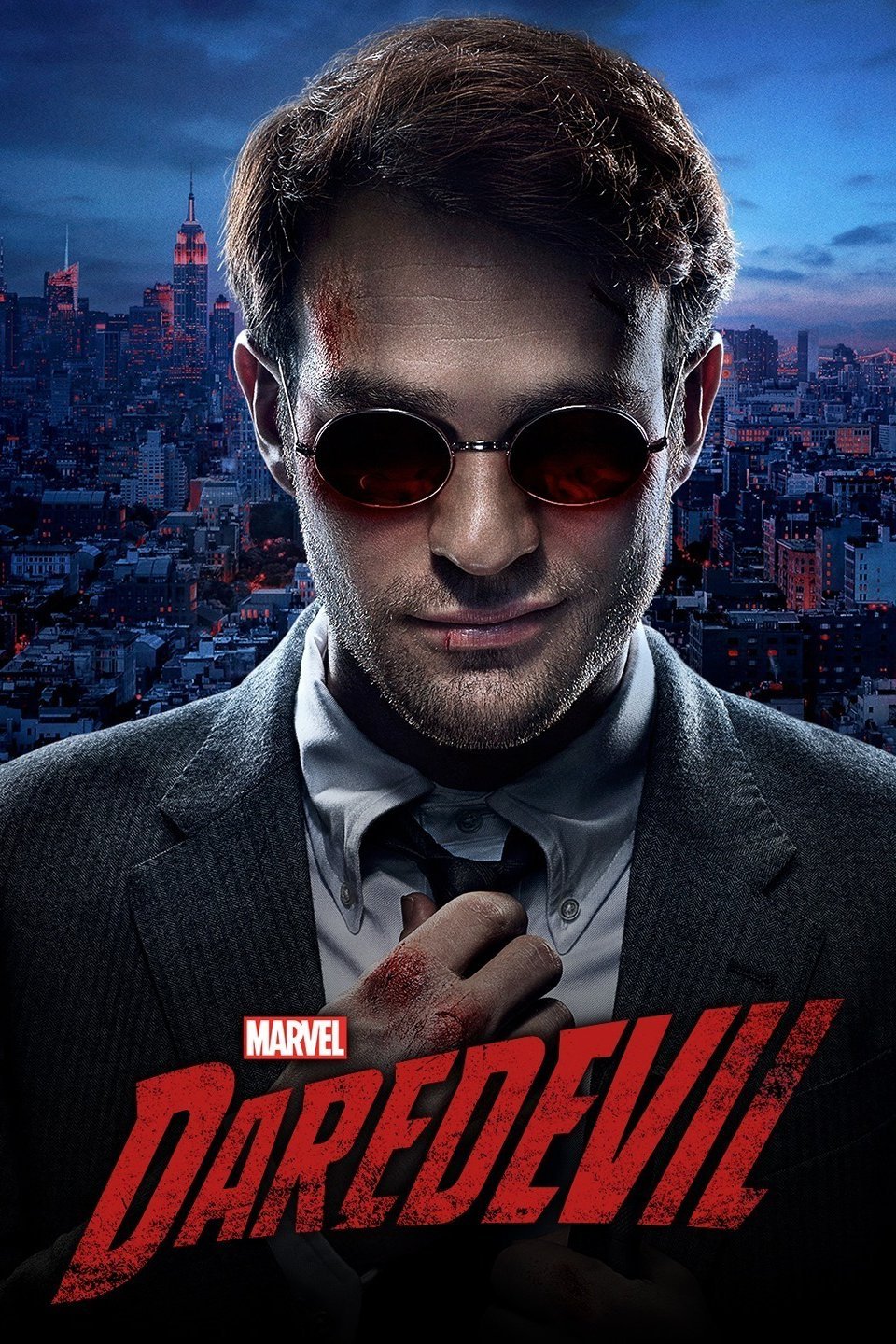
TV Time: "Daredevil" (TV-MA - Netflix/Marvel/Disney - 13 ep., 50 min. avg.)

Note- Once upon a time, I saw Winter Soldier and thought, "This is the best Marvel movie period." Then I saw Guardians of the Galaxy and thought "This is the pinnacle of modern blockbuster filmmaking." I couldn't wait to see another film from these mad geniuses that reached those levels, and I found it in a Netflix Original.-End Note


Created by Drew Goddard
Alo Party Peoples.

One of the unique advantages the Marvel Cinematic Universe gets from being an interconnected universe is that there is a wide variety of story types and genres that can be explored within that universe. Captain America can go from old-fashioned pulp adventure to paranoid conspiracy thriller, Guardians of the Galaxy is a comedy space opera, Thor is a science-fantasy epic, they can do anything.

But not every story possibility lends itself to blockbuster film making. You can easily get a big audience draw from Thor, or Captain America, with Iron Man or The Avengers you can even pass the billion dollar mark, but I'm not sure there's a sizable amount of people on Earth that want to see a movie about Howard the Duck. (although that didn't stop George Lucas from trying) That's why I was excited when Marvel announced that they would be doing Netflix series based around their more obscure street-level characters, it shows that they're big enough to go small. Streaming services in general has opened the floodgates for concepts that wouldn't be viable in theaters or on broadcast TV to find a dedicated audience. The inner workings of the ascent to power of a congressman, or the complex social hierarchies of a women's prison, generally stuff too taboo for mainstream audiences to touch, suddenly gets to flourish under this new business model.

Besides changing what we expect from media, it's also been changing the way we consume media. Once upon a time, if you didn't watch something as it aired, you generally didn't expect to ever get another chance too see it outside of reruns. That's why so many shows were episodic in nature, i.e. each episode was its own self contained story, you just couldn't expect everyone to tune in week to week. VHS may have mitigated the problem somewhat, but the tapes had limited storage capacity, degraded over time, and took up far too much shelf space for keeping an entire season of something to be practical - all of that assuming you had a VCR to record and play back shows with.

Then the arrival of DVDs, and later time shifting services like DVRs and on demand streaming changed everything. It suddenly became a lot easier to do over-arching interconnected storylines with complex characters, because people could now follow it more easily since they didn't need to be in a certain place at a certain time to do so. Fifteen, even ten years ago, something like Game of Thrones or Mad Men or Orange is the New Black - or even the MCU itself now that I think about it - probably couldn't have existed, and they certainly wouldn't have been the norm, but now they increasingly are.

Daredevil is definitely a departure from the norm for Marvel Studios. The closest entry I can think of is Winter Soldier, and even that's a stretch since Daredevil is much smaller in scale and very different in tone. Regardless of their genre, Marvel Studios so far has kept up a standard approach to aesthetics for the most part, usually resembling comic panels come to life. Daredevil ditches that for harsh lighting, handheld cameras, and a pulp-noir texture that feels somewhere between Agent Carter and Gone Girl. To wit, Matt Murdock was blinded as a child by toxic chemicals that enhanced his remaining senses to near-superhuman levels. He grew up, and by day he works as a defense attorney alongside long-time associate Foggy Nelson, but by night he becomes the mysterious masked vigilante only known as "the Devil of Hell's Kitchen". While doing his job, both personas stumble upon an organized crime ring targeting the neighborhood eventually discovering a plot by mysterious billionaire Wilson Fisk to clean up the streets via forced gentrification.

Netflix's loose content restrictions allow Daredevil to go where the movies cannot. Like, the Iron Man movies are a good time, but Disney would never let them go into Tony Stark's drinking problems. This is best exemplified in the Daredevil's approach to action. Whereas most of the action in the Marvel Cinematic Universe has been built around lasers and monster punches and magic hammers, but Daredevil's action is built around close-quarters brawling among mostly normal humans with mundane weaponry, which makes it feel a lot more brutal, tactile, and immediate. It's less like The Avengers' candy colored CGI fireworks and more reminiscent of Asian martial arts films ala Bruce Lee.

The action, while certainly impressive, is not the primary focus of Daredevil. Instead, it's a much more character driven show, and that means it lives or dies on the acting, which is phenomenal. Charlie Cox comes across as an immensely likable cad as Matt Murdock, and his Daredevil is appropriately menacing. Eldon Henson brings great comic relief as Foggy Nelson, Deborah Ann Wol works wonders as client turned co-worker Karen Page, and they all have great conversational rapport, but the best by far is Vincent D'Onofrio as Wilson Fisk.

If Marvel Studios has had any real weakness, it's that besides Loki they generally don't have very compelling or memorable villains, but Wilson Fisk is a great, complex character. He has a very specific image of what he wants the new Hell's Kitchen to be, and he will do anything and everything to achieve it, operating with the shy emotional maturity of a twelve year old. All those poor people already living there are either obstacles to be overcome or tools to be used in his sociopathic pursuit of his dream. He comes across as very comfortable with his position at the top of the ladder, but he's got a rage barely concealed below the surface that is always threatening to come loose.


Daredevil can go toe-to-toe with the best of the Marvel Cinematic Universe while also being utterly distinct from it. Even if you don't care for or about the Marvel movies, if you have Netflix, Daredevil is a must watch.

Have a nice day.

Greg.B